The matchup between the Denver Broncos vs New Orleans Saints Match Player Stats may not be a traditional rivalry, but every time these two teams meet, the game delivers strong storylines, tactical battles, and eye-catching player performances. From quarterback decision-making to defensive pressure and rushing efficiency, the player stats from Broncos vs Saints games reveal exactly how and why outcomes unfold the way they do.
In this in-depth article, we’ll break down Denver Broncos vs New Orleans Saints match player stats from an expert perspective, while keeping the tone casual, easy to follow, and fan-friendly. This analysis focuses on individual contributions, unit performance, and what the numbers truly mean beyond the box score.
Game Overview: How the Broncos and Saints Matched Up
When analyzing Broncos vs Saints matchups, the first thing that stands out is how tempo and balance often dictate the game. Denver has leaned toward a controlled, methodical approach, while New Orleans has frequently relied on passing efficiency and defensive adjustments to stay competitive.
In recent meetings, Denver has consistently outperformed New Orleans in time of possession, total offensive balance, and red-zone execution. These games were not blowouts by chance — the Broncos executed cleaner football, made fewer mistakes, and capitalized on short-field opportunities created by defensive pressure.
Statistically, Denver usually finishes with higher total yardage, fewer turnovers, and better third-down conversion rates. Meanwhile, the Saints often show respectable individual numbers but struggle to connect those performances into sustained scoring drives.
Denver Broncos Offensive Player Stats Breakdown
Quarterback Performance: Efficient and Controlled
The Broncos’ quarterback play has been a major factor in recent games against the Saints. Rather than relying on flashy passing numbers, Denver quarterbacks have focused on efficiency, ball security, and situational awareness.
Passing stats often show moderate yardage totals, but a strong completion percentage and very few interceptions. This approach limits defensive mistakes and keeps the offense on schedule. In addition, Denver quarterbacks have used their mobility well, adding rushing yards that don’t always show up as highlight plays but consistently move the chains.
What makes this performance impressive is the ability to read coverage and avoid unnecessary risks. Against a Saints defense that can generate pressure, Denver quarterbacks have shown patience, making smart throws rather than forcing plays.
Running Backs: The Engine of the Offense
The Broncos’ running game has been one of the most statistically dominant aspects of these matchups. Denver running backs consistently post strong yards-per-carry numbers while also contributing heavily in goal-line situations.
Rushing stats often show:
- Steady gains on early downs
- Multiple red-zone rushing attempts
- Touchdowns that swing momentum
Denver’s ability to run effectively forces the Saints defense to stack the box, which opens up play-action opportunities and keeps defenders guessing. Even when rushing totals aren’t massive, the impact of those carries is evident in clock control and defensive fatigue.
Wide Receivers and Tight Ends: Timely Contributions
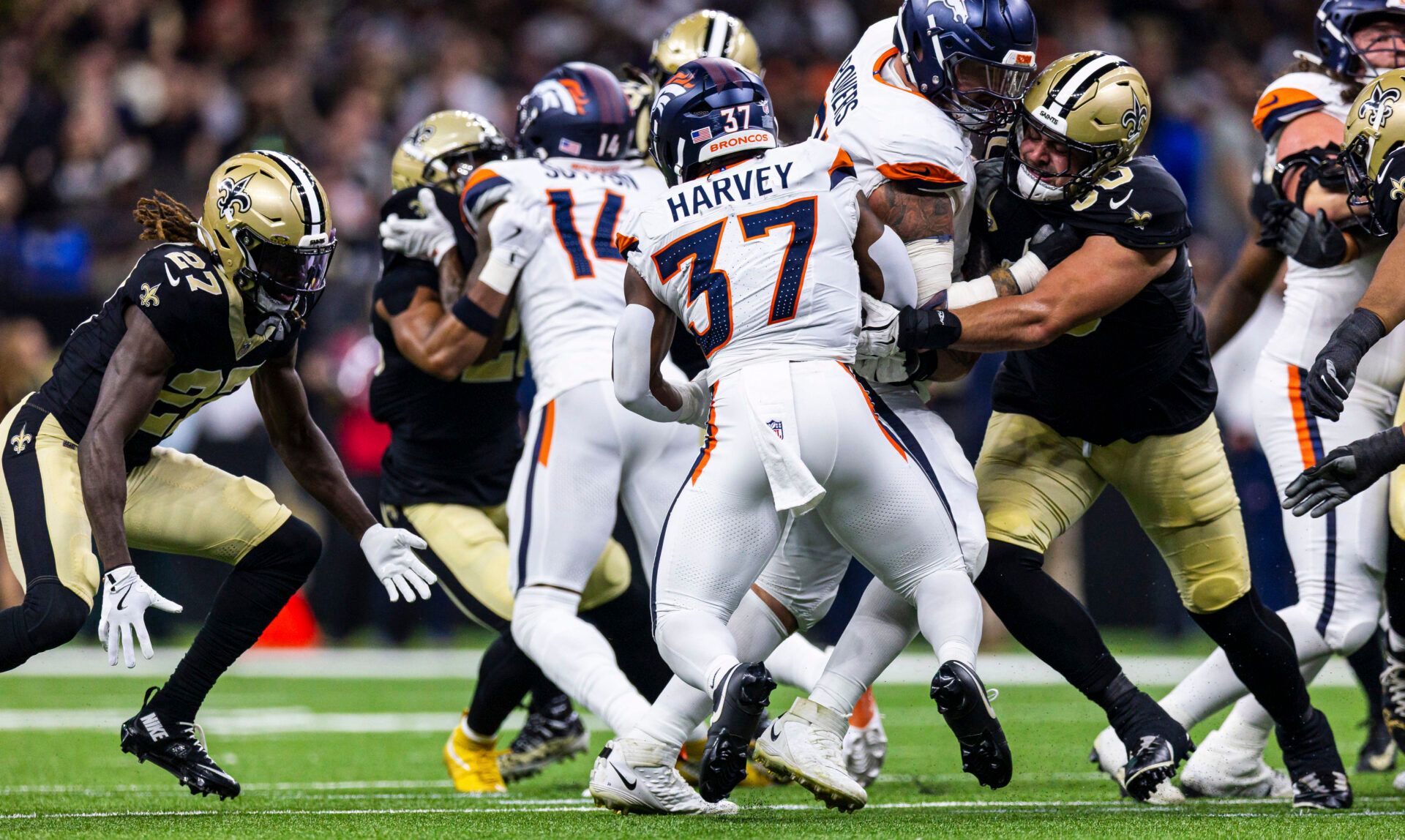
While Denver Broncos vs New Orleans Saints Match Player Stats receiving stats may not always dominate headlines, the wide receivers and tight ends consistently make plays at critical moments. Third-down conversions, short-yardage receptions, and red-zone catches define their contributions.
Receivers often spread the ball around, with no single player posting overwhelming numbers. This balanced distribution makes it difficult for the Saints to lock down one target and allows Denver to adapt throughout the game.
Tight ends also play a crucial role, particularly in blocking and short-range receptions. These “hidden” stats don’t always stand out but significantly influence offensive success.
New Orleans Saints Offensive Player Stats Breakdown
Quarterback Play: Volume Without Consistency
Saints quarterbacks often finish games with respectable passing yard totals against Denver, but the efficiency numbers tell a more complex story. Completion percentages may be solid, but yards per attempt and red-zone efficiency tend to fall short.
The Saints frequently rely on short and intermediate passes, resulting in:
- Decent total passing yards
- Limited explosive plays
- Fewer passing touchdowns than expected
This style can keep games close early but becomes problematic when the Saints fall behind and need quick scores. Pressure from the Broncos defense often leads to rushed throws and stalled drives.
Running Game: Inconsistent Impact
New Orleans running backs have shown flashes of productivity but struggle to maintain consistency throughout the game. Early drives may feature solid runs, but as Denver adjusts defensively, rushing lanes tighten.
Statistically, Saints running backs often record:
- Moderate carry totals
- Low yards per carry in the second half
- Minimal red-zone success
Without a strong rushing threat, the Saints offense becomes more predictable, making it easier for Denver’s defense to focus on coverage and pressure.
Receiving Corps: Individual Effort, Limited Results
Saints receivers frequently post solid individual stat lines, with one or two players leading in receptions and yards. However, these numbers don’t always translate into points.
While receivers win matchups and create separation, the lack of deep-ball success and red-zone efficiency limits their overall impact. Many receptions occur between the 20-yard lines, resulting in long drives that fail to produce touchdowns.
Defensive Player Stats: Broncos vs Saints
Broncos Defense: Pressure and Discipline
Denver’s defense has been a major statistical advantage in these matchups. Sack totals, quarterback hits, and tackles for loss consistently favor the Broncos.
Key defensive trends include:
- Strong pass rush disrupting timing
- Tight coverage on third downs
- Effective red-zone defense
Linebackers and defensive backs contribute heavily in tackles, showing discipline and solid positioning. Even when New Orleans gains yardage, Denver’s defense stiffens when it matters most.
Saints Defense: Moments of Promise, Gaps in Execution
The Saints defense shows flashes of strength, especially early in games. Tackles and pass breakups are present, but consistency remains an issue.
Against Denver’s balanced attack, New Orleans defenders often struggle with:
- Containing mobile quarterbacks
- Stopping downhill rushing
- Maintaining coverage late in drives
These gaps show up clearly in the stats, particularly in rushing touchdowns allowed and third-down conversion rates.
Special Teams and Hidden Stats
Special teams play an underrated role in Broncos vs Saints matchups. Denver often gains an edge through reliable kicking, solid punt coverage, and favorable field position.
Field goal accuracy, extra points, and kickoff placement quietly contribute to Denver’s scoring consistency. Meanwhile, the Saints sometimes leave points on the field due to missed opportunities or conservative decision-making.
Hidden stats such as average starting field position and penalty yardage also favor Denver, reinforcing the idea that clean football often wins these games.
Key Statistical Differences That Decide the Game
When comparing Denver Broncos vs New Orleans Saints match player stats, a few categories consistently determine the outcome:
- Turnovers: Denver commits fewer mistakes
- Red-zone efficiency: Broncos finish drives stronger
- Rushing touchdowns: Denver controls short-yardage situations
- Defensive pressure: Saints quarterbacks face more disruption
These differences may seem small individually, but together they create a clear statistical edge for Denver.
Final Thoughts: What the Stats Tell Us
The Denver Broncos vs New Orleans Saints match player stats reveal a clear contrast in team identity. Denver plays disciplined, balanced football with strong defensive fundamentals and efficient offense. New Orleans showcases individual talent but struggles to maintain consistency across all four quarters.
From quarterback efficiency to rushing control and defensive execution, the numbers consistently favor Denver. While the Saints remain competitive and capable of big plays, the stats show that Denver’s structured approach often wins out.